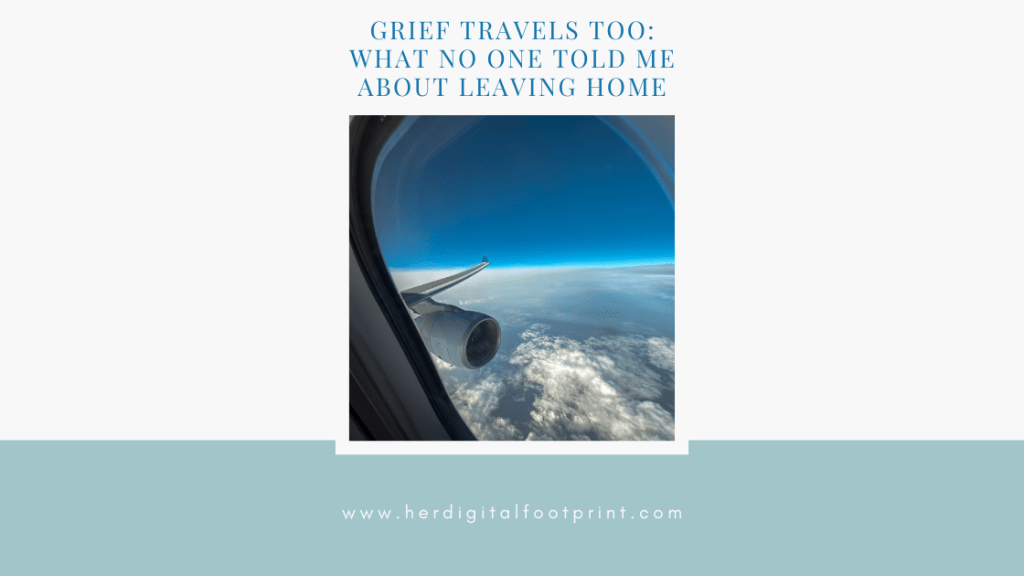
People love to say that travel heals you.
That if you leave far enough, long enough, something inside you will magically loosen its grip.
I believed that too, at least a little.
I left home carrying excitement, plans, and the quiet belief that movement would soften the things I didn’t yet know how to sit with. What no one really tells you is this: grief doesn’t stay behind when you cross borders. It packs itself carefully and comes along.
Sometimes, it even takes the window seat.
The Myth That Travel Heals Everything
There’s a comforting narrative we tell ourselves about travel, that it’s a reset button, a cure, a transformation waiting at the next destination. That new places will replace old pain.
But travel doesn’t erase what you’re carrying. It removes the distractions that kept you from noticing it.
Without familiar routines, people, and comforts, emotions rise to the surface faster. There’s no autopilot abroad. You feel everything more sharply – joy, loneliness, awe, fear, grief.
Travel doesn’t heal you.
It reveals you.
Leaving Home With Excitement and Unresolved Grief
When I left, I wasn’t only chasing experiences. I was also leaving behind versions of myself, relationships, expectations, and endings I hadn’t fully processed yet.
There was excitement, of course there was. But layered beneath it was unresolved grief: the kind that doesn’t announce itself loudly, the kind you learn to function around.
At the airport, grief didn’t look dramatic. It looked like silence. It looked like pretending I was lighter than I actually was. It looked like hope mixed with avoidance.
I didn’t know yet that distance doesn’t dilute grief, it concentrates it.
How Grief Shows Up on the Road
Grief abroad doesn’t always look like sadness. Sometimes it looks like exhaustion. Irritability. Disconnection. Forgetfulness. A sudden ache when you see something beautiful and wish you could share it with someone who no longer feels accessible.
It shows up in quiet hotel rooms.
On long bus rides.
In moments where you should feel free, but instead feel hollow.
And because you’re “living the dream,” it’s harder to name. You tell yourself you should be grateful. That you’re lucky. That you chose this.
All of that can be true, and grief can still exist alongside it.
Why Movement Amplifies Emotions
Movement strips away numbing mechanisms. When you’re constantly adjusting to languages, currencies, customs, time zones, your nervous system stays alert. There’s less room to suppress.
Travel amplifies what’s already there.
If you’re joyful, joy expands.
If you’re grieving, grief echoes louder.
This isn’t a failure of travel. It’s its honesty.
Being in unfamiliar places forces you into presence, and presence doesn’t discriminate between emotions. Everything gets airtime.
Learning to Travel With Grief, Not Away From It
The hardest lesson was realizing I couldn’t outrun what needed to be acknowledged. The more I tried to stay busy, the heavier everything felt.
So I stopped trying to leave grief behind and started letting it sit beside me.
I learned to slow down. To rest without guilt. To let certain days be quiet and unproductive. I stopped expecting travel to transform me and allowed it to hold me instead.
Grief doesn’t ask to be fixed. It asks to be witnessed.
And when I finally let it exist without resistance, something softened not because it disappeared, but because I stopped fighting it.
What the Journey Asked of Me?
Travel gave me many things; perspective, courage, resilience. But it also taught me something quieter and more important:
You don’t need to be healed to move forward.
You don’t need to be whole to begin.
You just need to be honest about what you’re carrying.
Grief travels too.
And that doesn’t make the journey weaker, it makes it real.


 herdigitalfootprint.com
Leave a comment